
Building a new bridge while keeping traffic moving
Since a new bridge is being built, won’t the Commission have to shut down the current Scudder Falls Bridge from the outset to carry out this project? Aren't there going to be enormous traffic jams once construction begins on a new bridge? These questions are probably the most frequent queries the Commission receives on the Scudder Falls Bridge Replacement Project.
The fact is the Commission plans to carry out bridge construction while allowing traffic to move across the river at all times. This can be achieved by designing the project in a manner that will allow for construction to take place in two major phases.
The first phase will involve construction of a new four-lane-wide span immediately upstream of the current aging bridge. The old bridge will remain in service during this phase. Single-lane travel restrictions in either direction on I-95 are to be limited strictly to off-peak travel times. Once the first span of the new bridge is constructed, it will go into service carrying all of the old bridge's traffic (both directions). This will clear the way for the project's second phase involving demolition of the old bridge and construction of the new bridge's second span. When the second span gets built, it will go into service carrying only northbound traffic lanes. The first span will then be converted to southbound traffic only.
This two-stage approach has been a core project concept since the project's earliest planning stages. It will enable I-95's mainline traffic to continue moving relatively unimpeded across the river as a new replacement structure gets built. While there may be some challenges at major bridge construction intervals and traffic transition periods, the ultimate goal is to allow I-95 traffic to keep moving through the project area with two lanes available in each respective direction during peak commuting periods.
Please scroll down through the following sequence of conceptual renderings to see how traffic can keep moving through the bridge corridor while a twin-span bridge gets built. This is just one methodology. Other approaches ultimately could be employed by the contractori providing they meet the approval of applicable permit-issuing agencies.
(Note: The staging (sequencing) of the new bridge's construction may vary from what is being shown below. However, the methodology that ultimately is employed to construct the twin bridge structures will be up to the contractor. There are many potential ways to build the new bridge, but the basic stages shouldn't change appreciably. More specifics will become available once contractor plans are fully submitted and reviewed in 2017.)
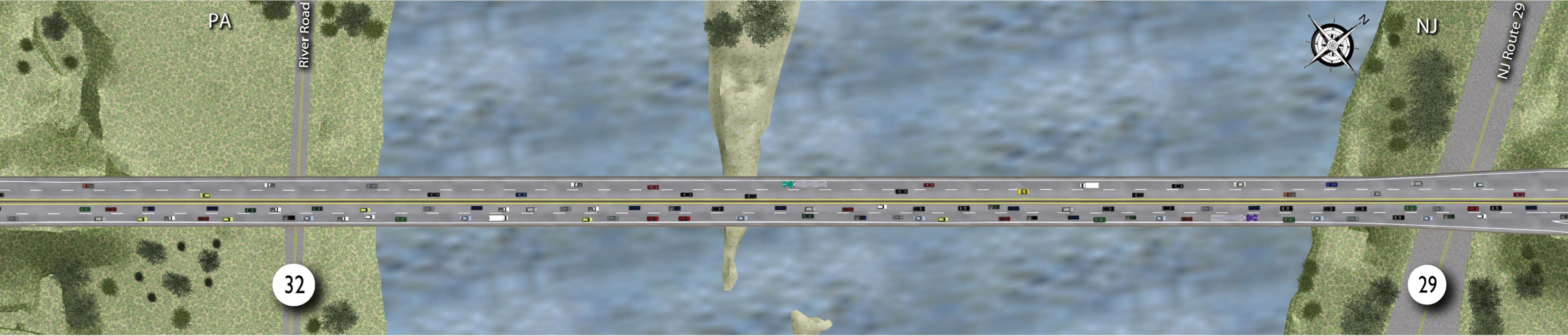
Existing Scudder Falls Bridge
Install a temporary causeway
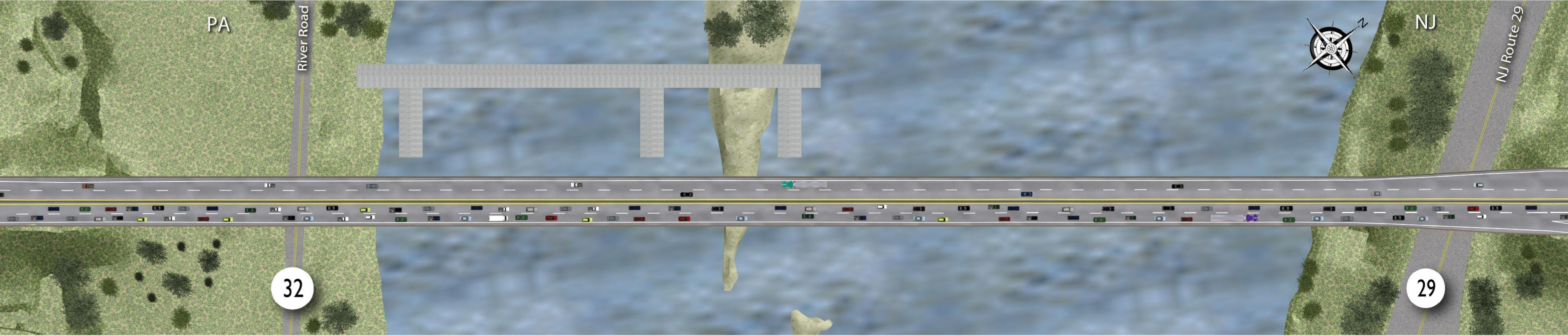
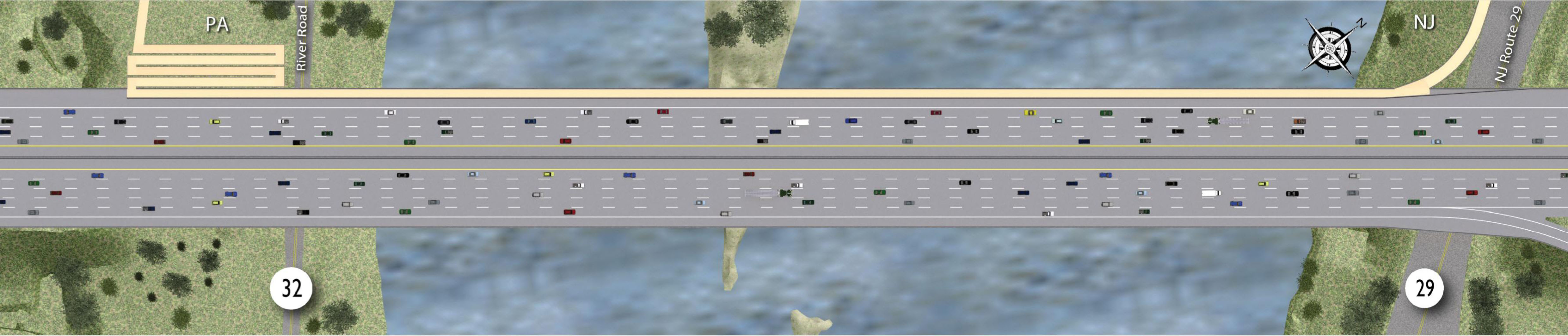
Image depicts a roughly 550-foot-long temporary causeway from Pennsylvania side upstream of existing bridge and extending across Park Island.
Construct two land piers and three river piers to support first half of Scudder Falls Replacement Bridge’s upstream span
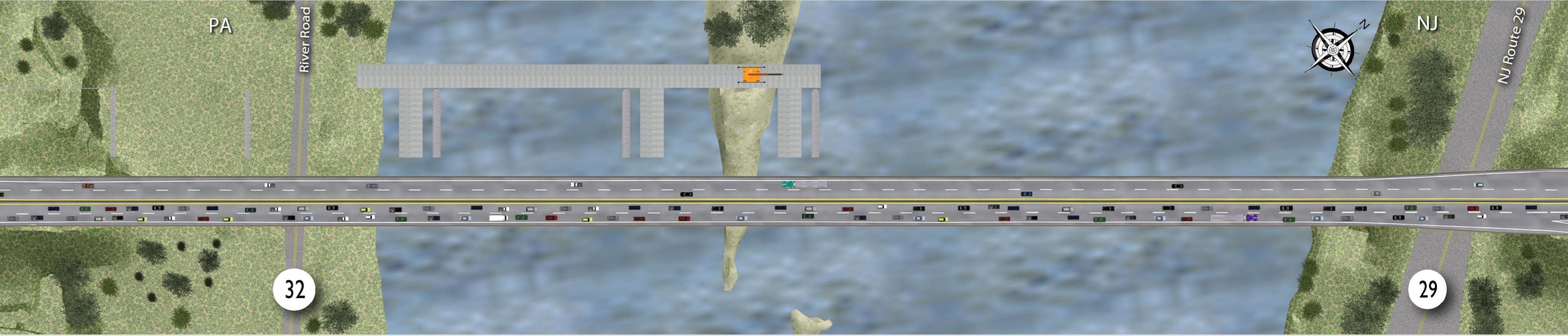
Construct bridge deck atop first five piers for the Scudder Falls Replacement Bridge
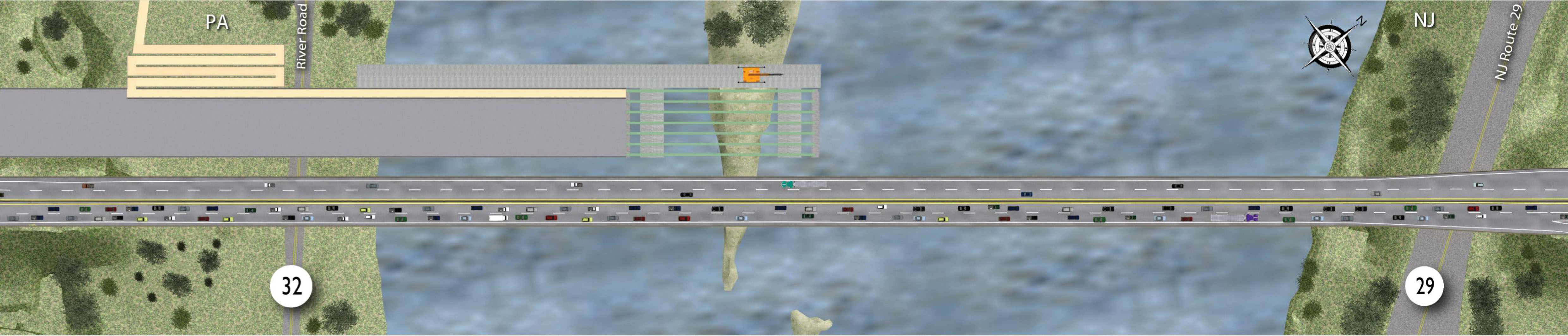
Install second temporary construction causeway
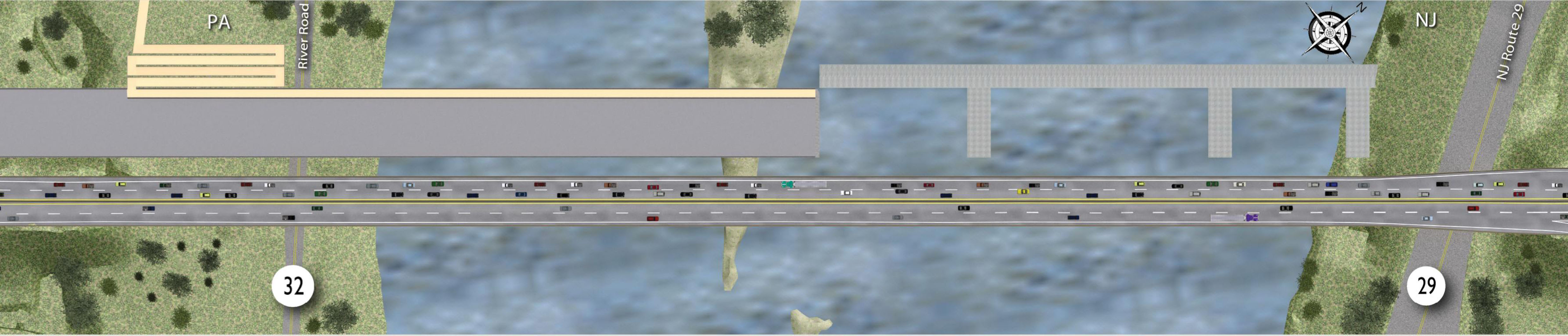
Construct two land piers and two river piers to support second half of upstream span of Scudder Falls Replacement Bridge
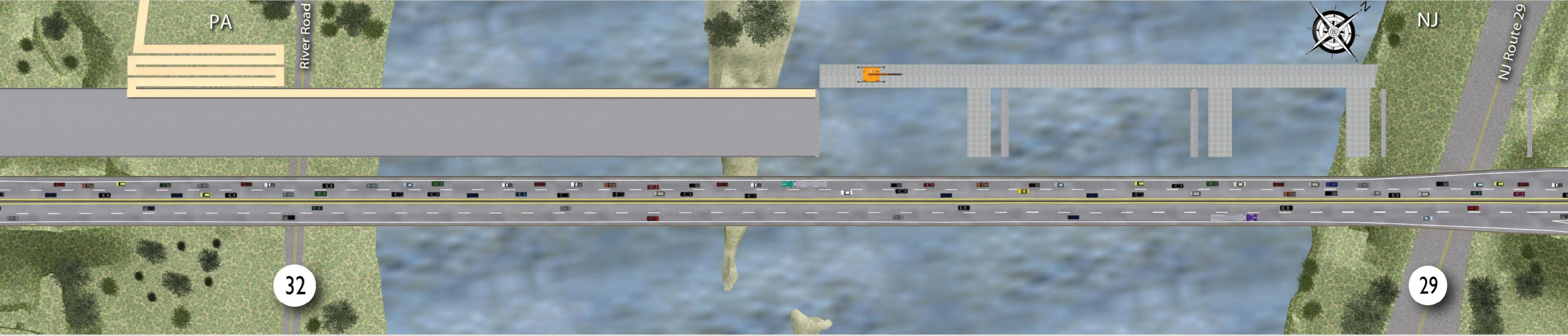
Install bridge deck atop final four piers for first span; first new span is nearly completed
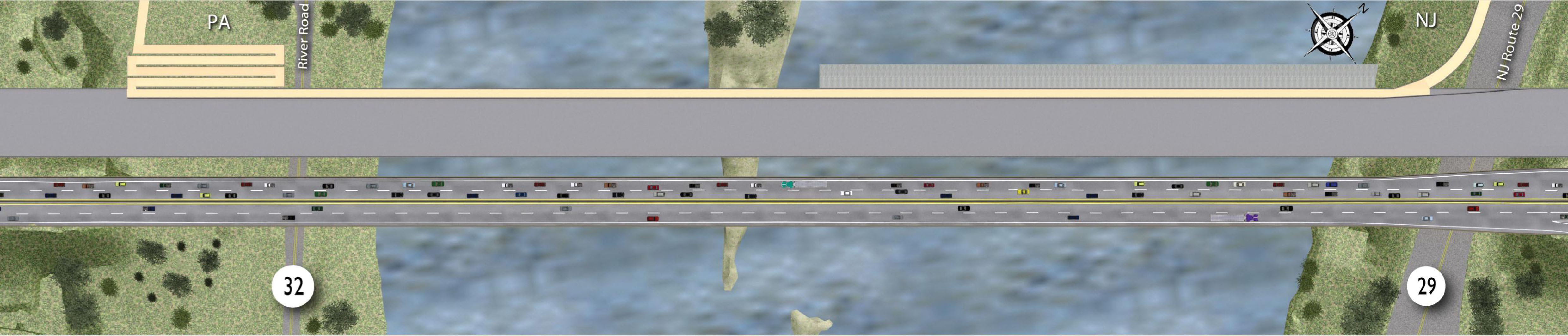
Rendering shows completed bike-ped facility with ramp to the Delaware and Raritan Canal footpath on the New Jersey side; contractor will then remove the second temporary causeway, stabilize the affected river area and restore it to pre-construction condition.
Move all traffic from existing Scudder Falls Bridge to the newly constructed upstream span of the replacement bridge
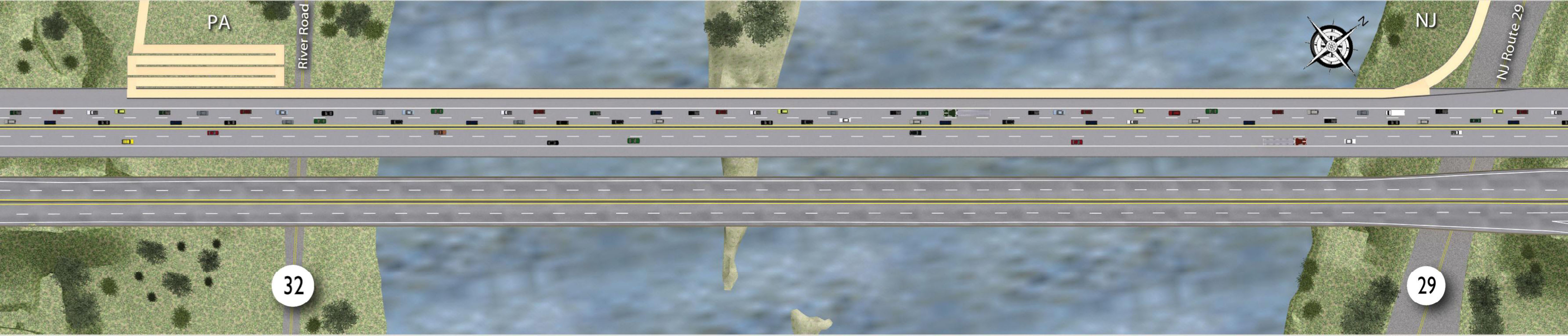
Install third temporary construction causeway
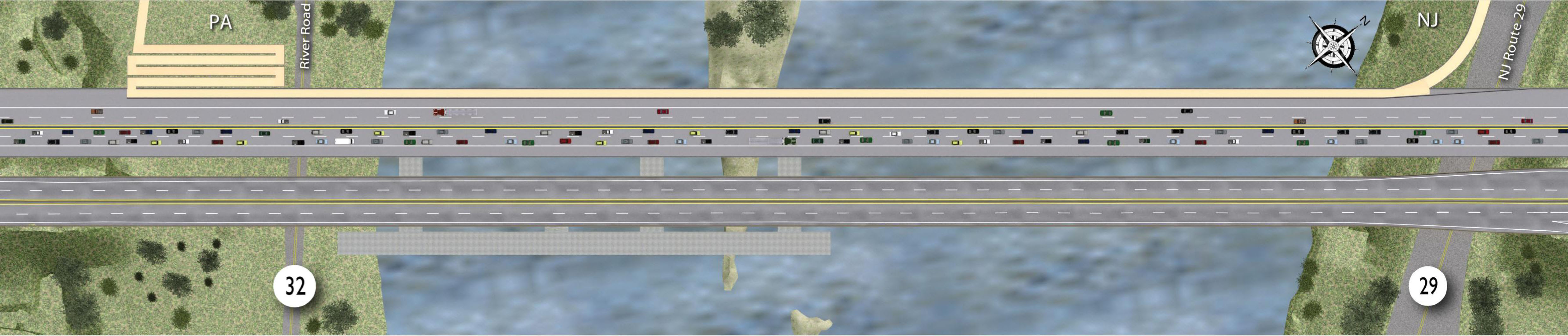
Demolish first half of old bridge
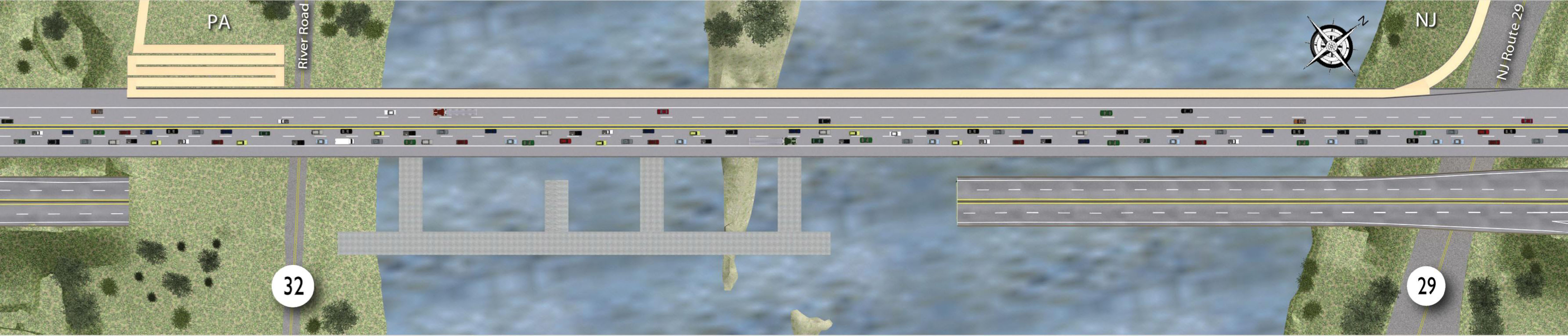
Install masonry piers to support the first half of the new bridge’s downstream span.
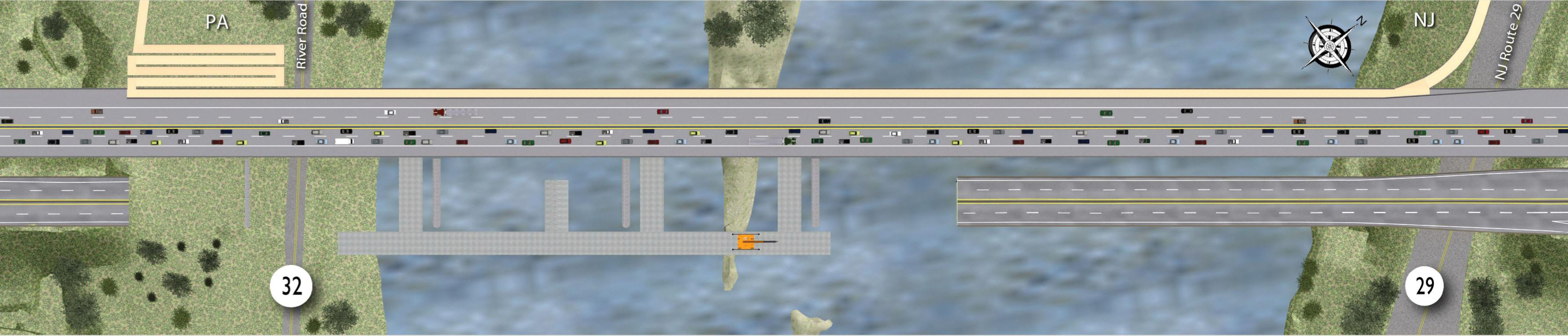
Install bridge deck atop first four piers for the replacement bridge’s downstream span.
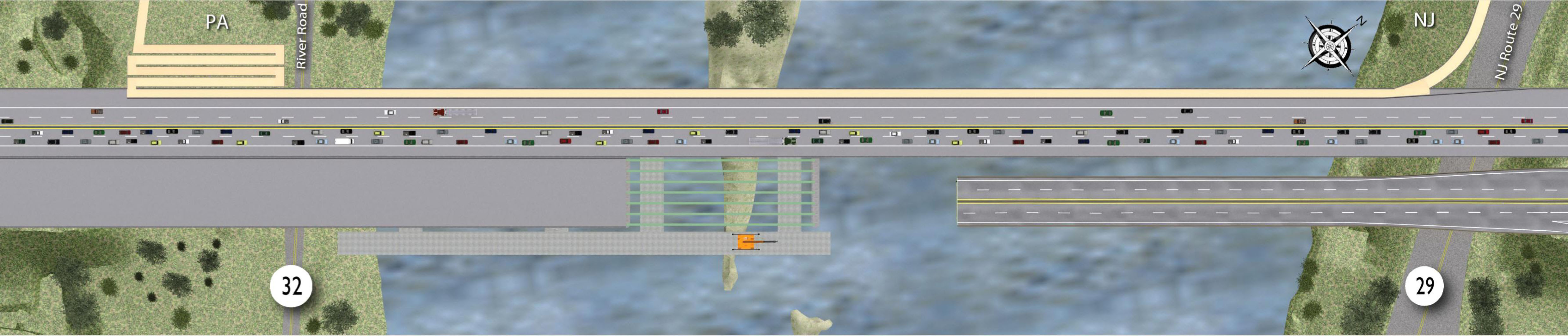
Install fourth and final temporary construction causeway
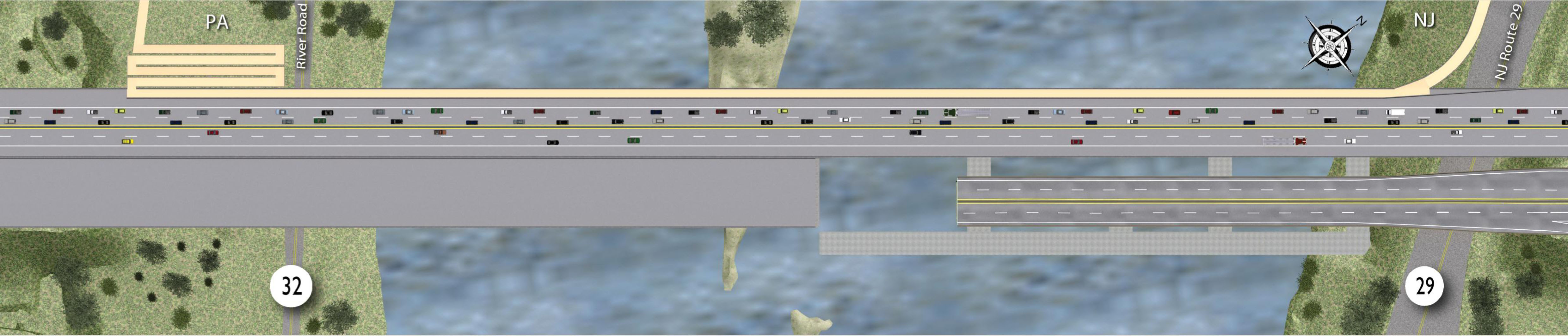
Demolish old bridge’s remaining deck and piers
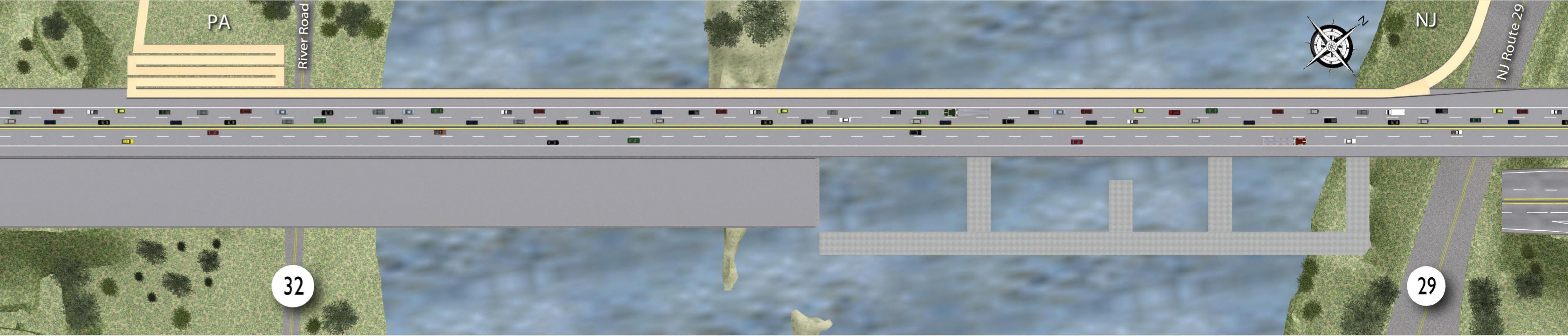
Install piers for second half of new bridge’s downstream span
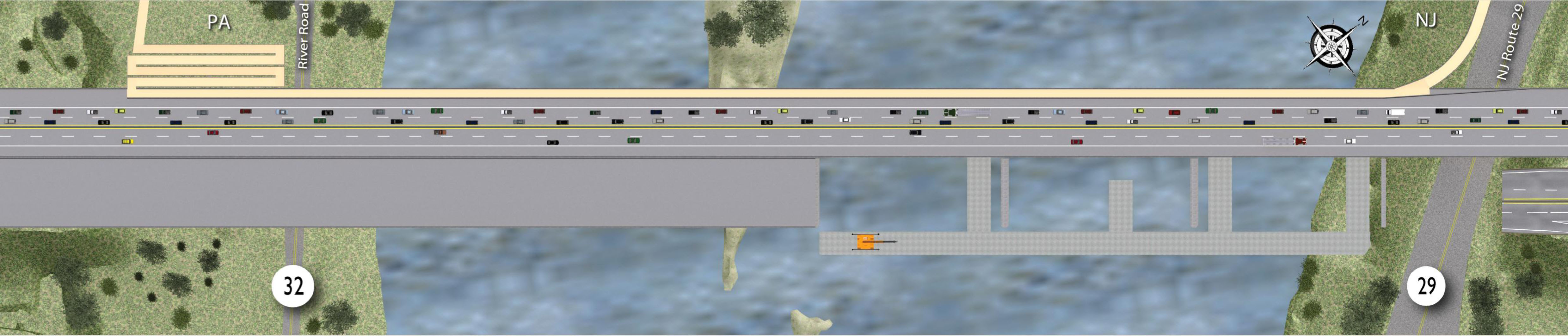
Construct remaining bridge deck to complete second span of new bridge
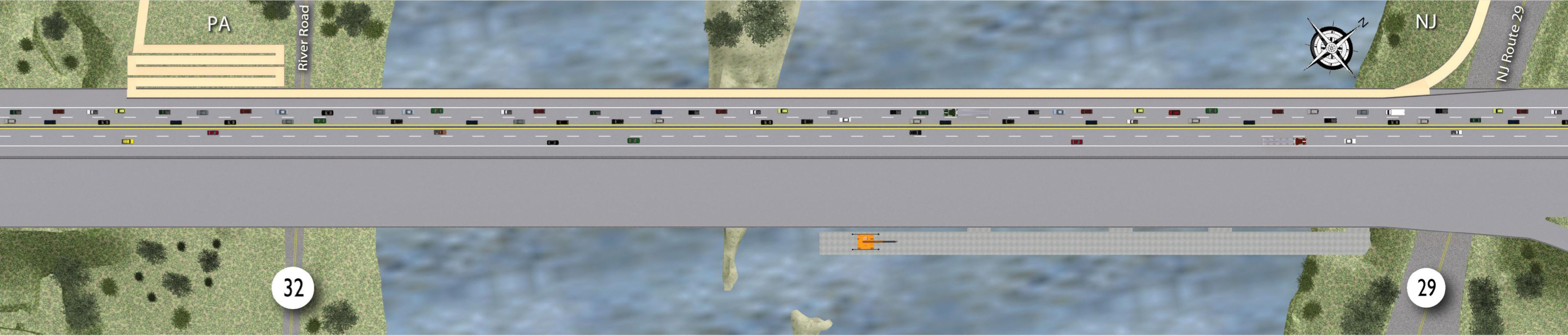
Northbound traffic is shifted to completed downstream span and final temporary construction causeway is removed from the river.
Completed Bridge Project Area
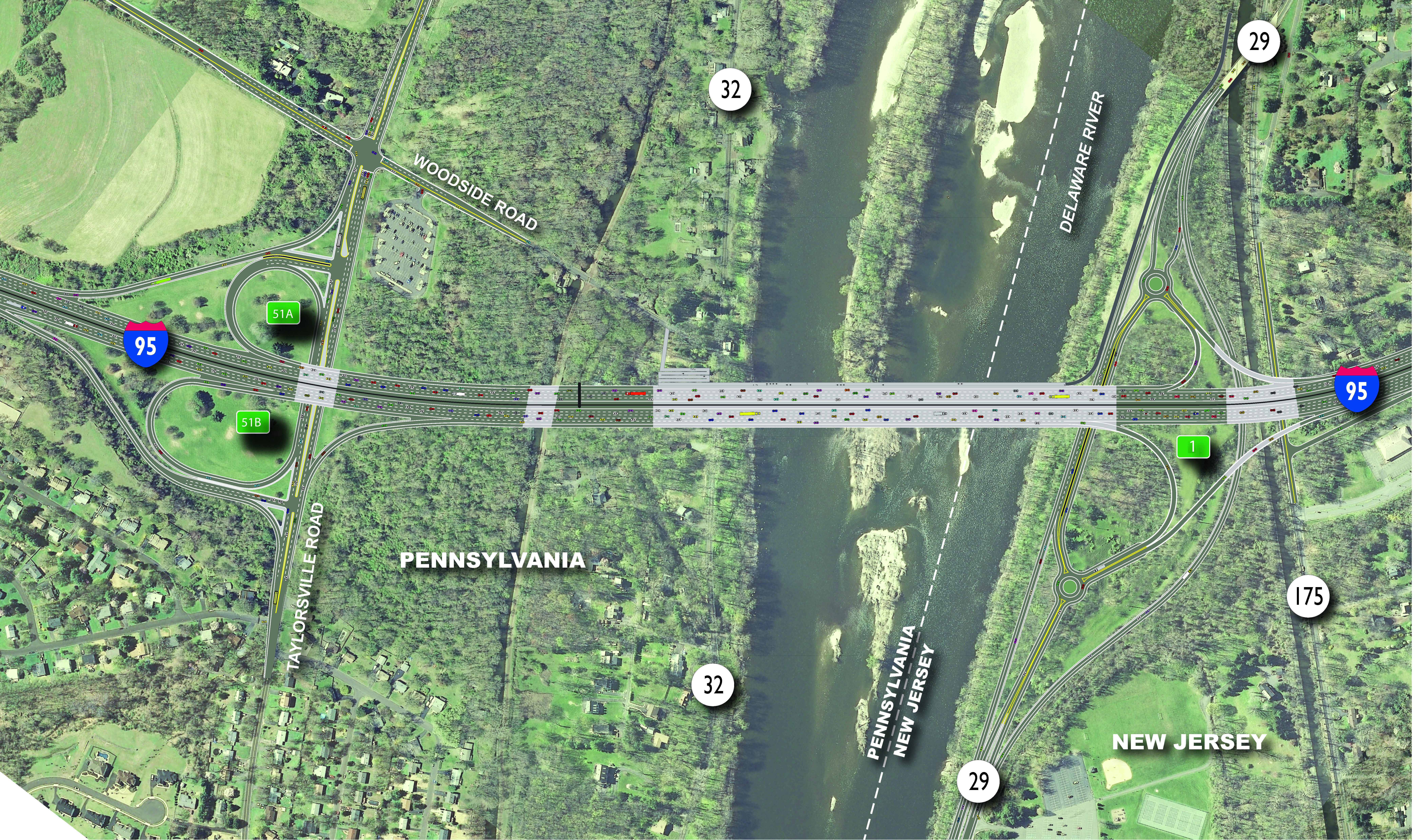
- A new twin-span bridge carrying three through-traffic lanes along each direction of I-95. The southbound span (upstream) will have an additional auxiliary lane to allow for safe merging of traffic entering from the Route 29 interchange in New Jersey and exiting to the Taylorsville Road interchange in Pennsylvania. The northbound span (downstream) will have two additional auxiliary lanes to allow for safe merging of traffic entering from the two Taylorville Road highway access ramps as well as traffic exiting to Route 29 immediately after the bridge in New Jersey.
- A reconfigured Taylorsville Road Interchange in Lower Makefield, PA. All exiting traffic from I-95 to Taylorsville Road will use an improved combination exit lane immediately after crossing Taylorville Road. Vehicular flow at the bottom of the exit ramp will be controlled by traffic signals.
- A fully redesigned and reconstructed Route 29 interchange with roundabouts. This design will avoid traffic signals. Bypasses for NJ Route 29 northbound and southbound traffic will be retained. Improved acceleration and deceleration lanes will be provided to move onto and off I-95. The stop sign at the current I-95 southbound entrance ramp from Route 29 will be eliminated.
- A widened I-95 segment in Pennsylvania from the new bridge to the PA Route 332 interchange (Newtown exit). The widening will be to the inside of the current highway, using a large swath of the existing center median.
- An all-electronic toll gantry of E-ZPass tag readers and cameras for license-plate billing will go into service in the southbound direction once the first span of the new bridge is opened to traffic. It will be located (see black bar across southbound lanes) on the Pennsylvania side of the bridge.
- A walkway on the upstream side of the bridge connects the footpath for the Delaware Canal in Pennsylvania with the footpath for the Delaware-Raritan Canal in New Jersey. (Note: The switch-back ramp system on the PA side of the walkway was eliminated in final design and replaced with a graduated ramp to Woodside Road and the canal footpath without switchbacks.)